


Video conferencing has evolved into a critical business enabler, supporting everything from executive boardroom meetings and hybrid collaboration to large-scale training sessions and global leadership calls through advanced AV solutions.
One of the most common questions we hear as an AV Integration company is:
Should we choose Cloud-Based or On-Premise Video Conferencing?
This blog breaks down the differences, benefits, and use cases—helping you choose the right AV solution aligned with your business goals.
Understanding Video Conferencing in the AV Ecosystem
A successful video conferencing setup is not just about software. It’s about professional AV integration, including:
- Enterprise-grade cameras and microphones
- Acoustic design and display optimization
- Control systems and automation
- Secure network and IT compatibility
Whether cloud-based or on-premise, AV integration plays a critical role in performance, reliability, and user experience.
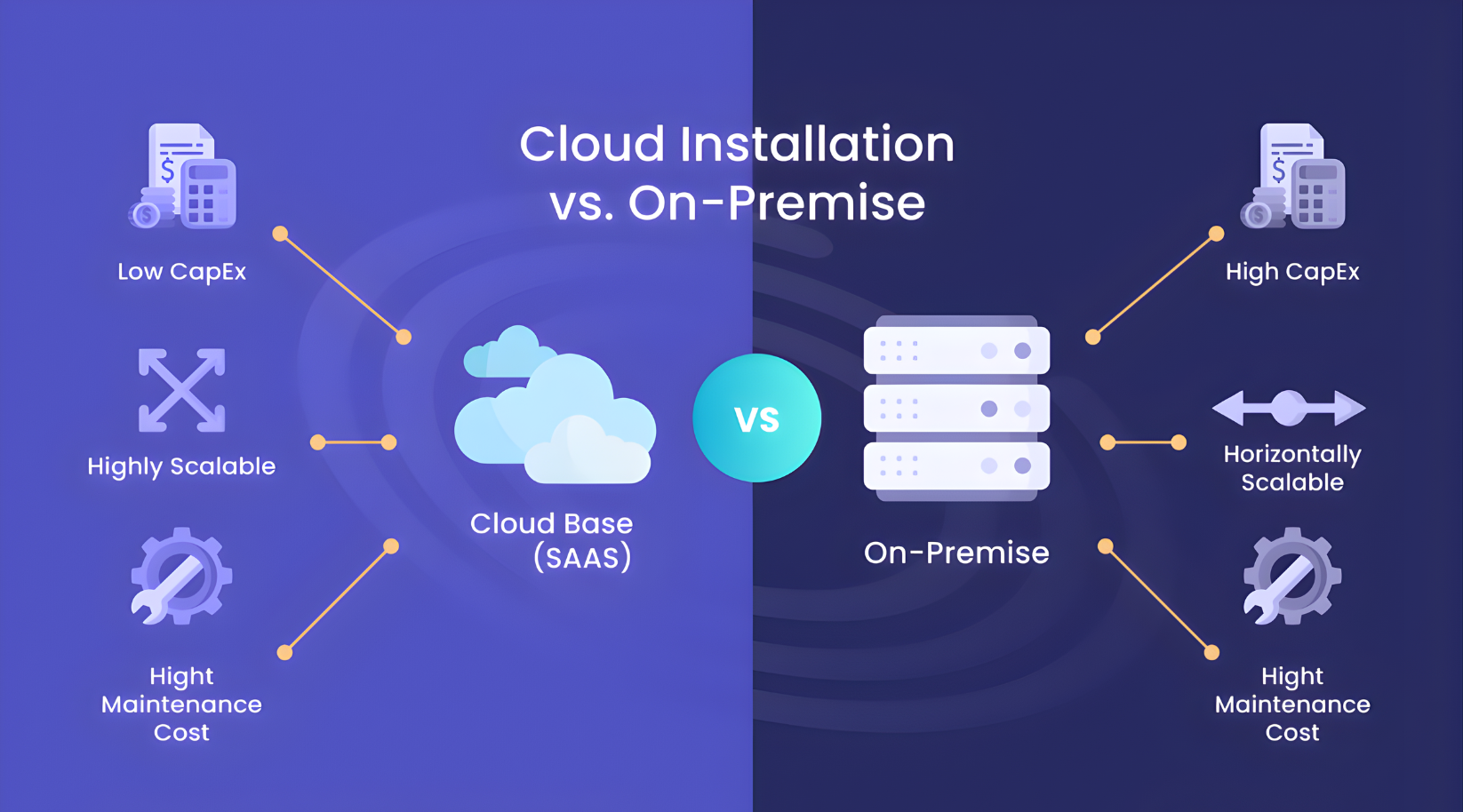
What Is Cloud-Based Video Conferencing?
Cloud-based video conferencing solutions operate over the internet, hosted on secure cloud platforms such as Zoom, Microsoft Teams, Google Meet, or Webex.
Key Benefits of Cloud-Based Video Conferencing
- Faster deployment and scalability
- Lower upfront infrastructure cost
- Automatic software updates and feature enhancements
- Ideal for hybrid and remote work environments
- Easy integration with modern AV meeting rooms
Best For: Organizations with distributed teams, flexible work models, and a need for rapid scalability.
What Is On-Premise Video Conferencing?
On-premise video conferencing solutions are hosted within an organization’s own IT infrastructure, offering complete control over data and system management.
Key Benefits of On-Premise Video Conferencing
- Enhanced data security and compliance
- Greater customization and system control
- Stable performance independent of internet fluctuations
- Ideal for mission-critical environments
- Long-term cost control for large enterprises
Best For: Organizations with strict security requirements, regulated industries, and dedicated IT teams.
Cloud-Based vs On-Premise: A Strategic Comparison
Factor | Cloud-Based Video Conferencing | On-Premise Video Conferencing |
Deployment | Quick & flexible | Planned & infrastructure-driven |
Scalability | High | Moderate |
Security Control | Shared responsibility | Full internal control |
Maintenance | Vendor-managed | IT/AV team-managed |
Ideal Use Case | Hybrid offices, SMEs | Large enterprises, command centers |
The Role of AV Integration in Making the Right Choice
The real success of video conferencing lies in how well the AV system is designed and integrated—not just where it is hosted.
A professional AV integration partner ensures:
- Seamless compatibility with cloud or on-premise platforms
- Optimized room acoustics and camera coverage
- Platform-agnostic AV hardware design
- Scalable and future-ready conferencing spaces
In many cases, organizations are now adopting hybrid AV conferencing architectures, combining cloud flexibility with on-premise security.
Why AV AMC Is Essential—Regardless of the Model
Whether cloud-based or on-premise, AV Annual Maintenance Contracts (AMC) are essential to maintain performance and uptime.
Benefits include:
- Preventive system health checks
- Firmware and hardware optimization
- Faster issue resolution
- Extended equipment lifecycle
Conclusion: Choose Strategy Over Technology
There is no one-size-fits-all answer. The best video conferencing solution depends on your:
- Business size and growth plans
- Security and compliance needs
- Hybrid work strategy
- Long-term AV roadmap
As an AV Integration company, our recommendation is simple:
Choose a solution that aligns with your business strategy—not just today’s trend.
Frequently Asked Questions (FAQs)
Q. What is the main difference between cloud-based and on-premise video conferencing?
Cloud-based solutions are hosted online and managed by service providers, while on-premise solutions are hosted within an organization’s own infrastructure.
Q. Which video conferencing solution is better for hybrid work?
Cloud-based video conferencing is generally better suited for hybrid work due to its scalability and ease of access.
Q. Are cloud-based video conferencing solutions secure?
Yes, most enterprise cloud platforms offer strong encryption and compliance standards, but on-premise solutions provide greater internal control.
Q. Can AV systems support both cloud and on-premise conferencing?
Yes. Modern AV-integrated meeting rooms can support hybrid deployments, enabling both cloud and on-premise conferencing.
Q. Is on-premise video conferencing more expensive?
On-premise solutions have higher initial costs but may offer better long-term value for large organizations with dedicated IT resources.
Q. Why do I need an AV integration partner for video conferencing?
An AV integration partner ensures optimized design, seamless performance, user-friendly operation, and long-term reliability through AMC services.