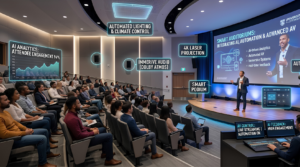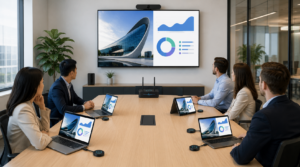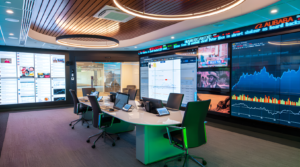

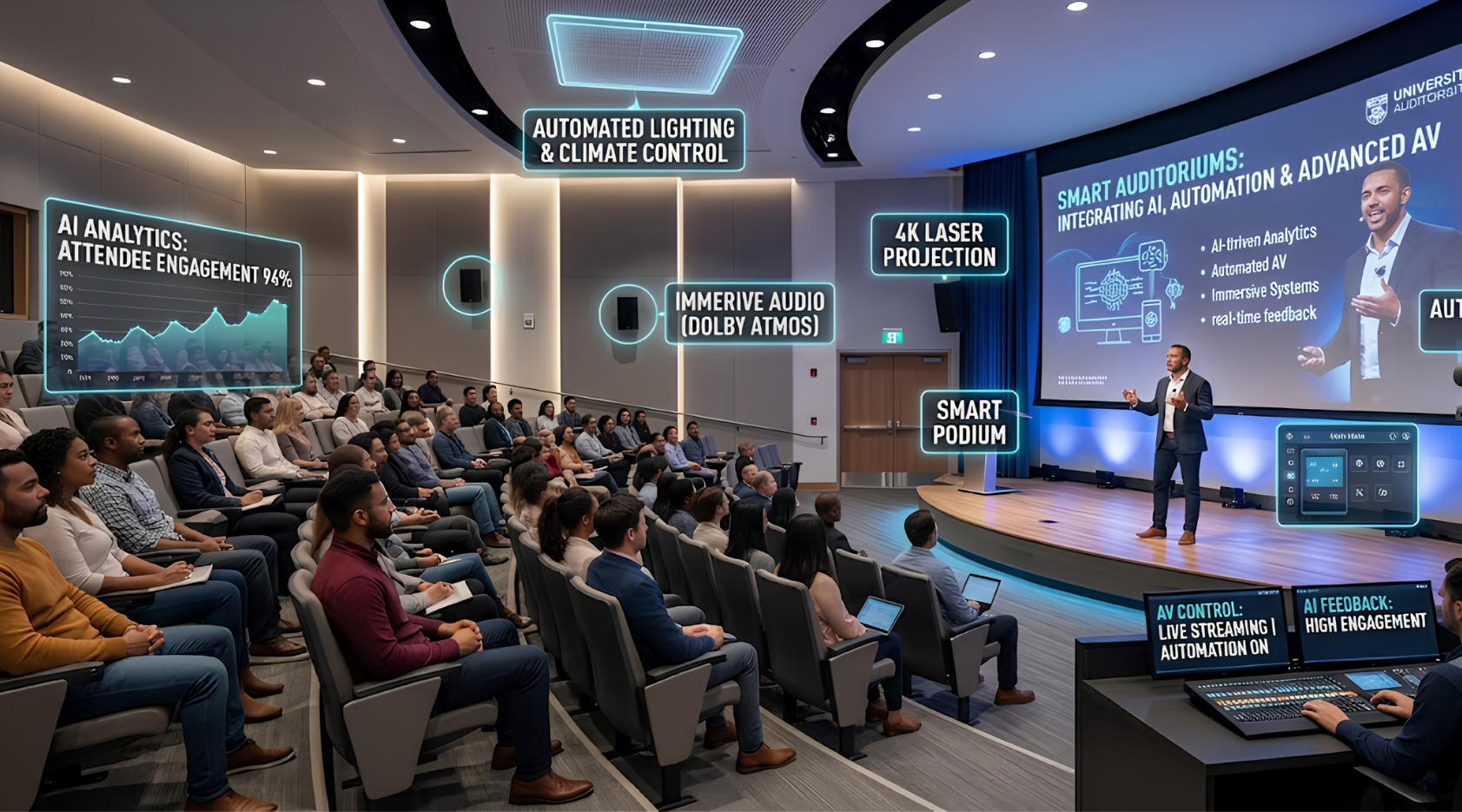
Modern auditoriums are no longer just large presentation spaces. They have evolved into intelligent environments where Artificial Intelligence (AI), automation, and advanced Audio-Visual (AV) technologies work together to create seamless, engaging, and highly efficient experiences.
Whether for corporate events, educational institutions, convention centres, or government facilities, smart auditoriums are redefining how organizations communicate, collaborate, and engage with audiences.
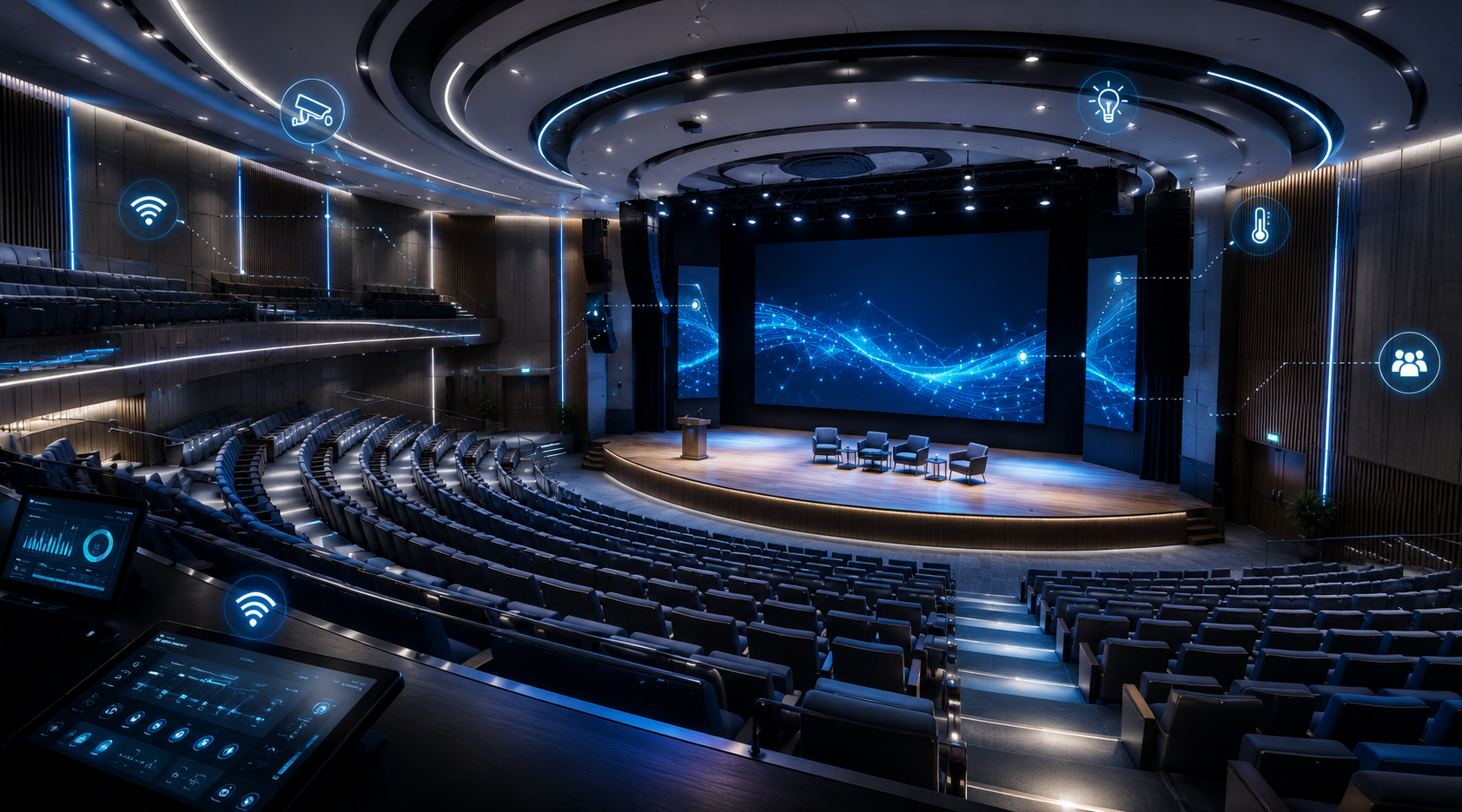
Understanding the Smart Auditorium:
A Smart Auditorium is an integrated technology-driven space that combines advanced AV systems, AI-powered controls, automation platforms, and intelligent analytics to enhance presentations, events, and audience experiences.
These auditoriums leverage technologies such as:
- AI-powered cameras and tracking systems
- Intelligent audio processing
- Automated lighting controls
- Large-format LED video walls
- Interactive displays
- Centralized AV management platforms
- Occupancy and environmental sensors
- Remote monitoring and diagnostics
Key Technologies Powering Smart Auditoriums
1. AI-Powered Camera Tracking
AI-enabled cameras automatically detect and follow presenters as they move across the stage. This eliminates the need for manual camera operation while ensuring professional-quality video capture and live streaming.
Benefits:
- Improved audience engagement
- Better hybrid event experiences
- Reduced operational costs
2. Intelligent Audio Systems
Advanced audio solutions use AI-based sound processing to automatically adjust microphone levels, suppress background noise, and optimize speech clarity.
Benefits:
- Crystal-clear communication
- Reduced audio feedback
- Enhanced audience experience
3. Automated Lighting Control
Smart lighting systems adjust brightness, colour temperature, and scene settings based on event requirements.
Benefits:
- Energy efficiency
- Enhanced stage visibility
- Improved event aesthetics
4. LED Video Walls and Digital Displays
High-resolution LED video walls deliver vibrant visuals, dynamic content, and immersive experiences for large audiences.
Benefits:
- Superior visual impact
- Flexible content management
- Better audience engagement
5. Integrated Control and Automation
Centralized control systems enable users to manage displays, audio, lighting, cameras, and environmental controls through a single touch panel.
Benefits:
- Simplified operation
- Faster event setup
- Reduced technical dependency
The Role of AI in Auditorium Management
AI is transforming auditorium operations by enabling:
Predictive Maintenance
AI systems monitor AV equipment performance and identify potential issues before failures occur, minimizing downtime.
Occupancy Analytics
Smart sensors track audience attendance and space utilization, helping organizations optimize seating and resource allocation.
Automated Scheduling
Integrated room booking systems can automatically configure auditorium settings based on event requirements.
Energy Optimization
AI-driven systems adjust lighting, HVAC, and AV equipment usage based on occupancy patterns, reducing operational costs.
Why Organizations Are Investing in Smart Auditoriums
As hybrid work, digital learning, and large-scale corporate events continue to grow, organizations require flexible and future-ready spaces that can adapt to evolving communication needs.
Smart auditoriums provide:
- Enhanced user experience
- Increased operational efficiency
- Better return on technology investments
- Improved collaboration capabilities
- Future-proof infrastructure for emerging technologies
At SISPL, we help organizations design and implement tailored Smart Auditorium Solutions by integrating cutting-edge AV technologies, intelligent automation, immersive display systems, and centralized control platforms. From concept and design to deployment and support, our expertise ensures every auditorium delivers exceptional experiences, operational efficiency, and long-term value.