

- The modern workplace environment has experienced a significant evolution in recent years.
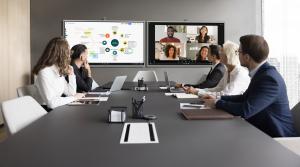
- With the rise of remote work and the need for flexible, collaborative environments, hybrid meetings have become a standard practice.
- However, these meetings come with their own set of challenges, particularly when it comes to bridging the gap between in-office and remote attendees.
Fortunately, innovations in technology are facilitating to create Seamless Hybrid Meeting Experiences that keep everyone connected, engaged, and productive.
Here are five key innovations making a difference.
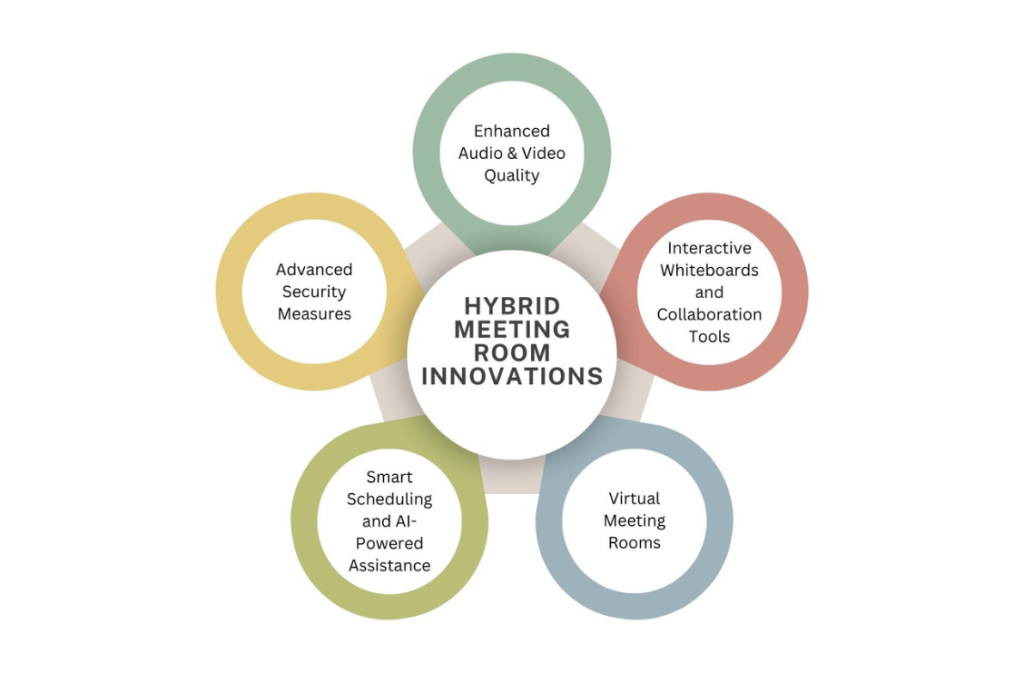
1. Enhanced Audio & Video Quality
- A major challenge in hybrid meetings is to guarantee that remote participants experience the same level of engagement as those present in the office. This begins with the provision of high-quality audio and video.
- Innovations in Audio Visual technology have resulted in exceptionally clear video resolutions, including 4K, along with sophisticated audio systems that effectively reduce background noise, ensuring that voices are distinctly audible.
- AI-driven cameras now automatically focus on the speaker, providing a more immersive experience for remote attendees, making it feel like they are right there in the room. These improvements ensure that every participant, regardless of location, has an equal presence in the meeting.
2. Interactive Whiteboards and Collaboration Tools
- Gone are the days when remote attendees were passive observers in a meeting. The advent of interactive whiteboards and collaboration tools has transformed the dynamics of teamwork.
- These tools allow participants, whether in the office or remote, to interact with content in real-time. They can draw, annotate, and share ideas seamlessly, fostering creativity and ensuring that everyone’s input is valued.
- For example, platforms like Microsoft Teams and Zoom now offer integrated whiteboard features that are accessible to all attendees, enabling real-time collaboration that bridges the physical divide.
3. Virtual Meeting Rooms
- Virtual meeting rooms are another innovation helping to bridge the gap between in-office and remote attendees. These digital spaces are designed to mimic the experience of being in a physical conference room.
- Participants can move around the virtual room, engage in side conversations, and even have a more immersive experience through VR and AR
- By recreating the dynamics of in-person meetings, virtual meeting rooms help remote attendees feel more connected and engaged, fostering a sense of belonging and teamwork.
4. Smart Scheduling and AI-Powered Assistance
- Scheduling a meeting that suits both in-office and remote participants can present significant logistical challenges, particularly when considering varying time zones. However, the advent of AI-driven scheduling tools is greatly simplifying this task.
- These tools evaluate participants’ calendars, time zones, and preferences to suggest optimal meeting times. Additionally, AI-powered assistants can facilitate to manage the flow of meetings, ensuring that every participant’s input is acknowledged and that action items and follow-ups are properly recorded.
- This automation not only saves time but also ensures that meetings are more productive and inclusive.
5. Advanced Security Measures
- As hybrid meetings often involve sharing sensitive information across various locations, security is a top concern. Innovations in cybersecurity are ensuring that hybrid meetings are secure and private.
- End-to-end encryption, multi-factor authentication, and secure file-sharing options are now standard in many hybrid meeting platforms.
- Additionally, advanced monitoring tools can detect and prevent unauthorized access, ensuring that all participants can focus on the meeting without worrying about security breaches. These measures are crucial in building trust and ensuring that hybrid meetings are safe for all participants.
Conclusion
- Hybrid meetings are here to stay, and the innovations mentioned above are crucial in bridging the gap between in-office and remote attendees.
- As technology continues to evolve, we can expect even more advancements that will further enhance the hybrid meeting experience, making it easier for teams to collaborate, no matter where they are located.
By embracing these innovations, organizations can ensure that their meetings are inclusive, productive, and secure, setting the stage for success in the modern workplace.