
- As organizations grow and become more complex, the need for efficient command centers becomes increasingly critical.
- Command centers are central to monitoring operations, facilitating real-time decision-making, and ensuring crisis management across industries like security, finance, transportation, and healthcare.
- With rapid advancements in technology, businesses must invest in future-proof Command Centers that can adapt to evolving needs and challenges.
In this blog, we’ll explore the 6 key technologies that are essential for building a future-proof command center, ensuring seamless operations, real-time collaboration, and data-driven decision-making.
By integrating cutting-edge AV Solutions, businesses can create command centers that are robust, scalable, and capable of meeting both present and future demands.

1. LED Video Walls for Real-Time Data Monitoring
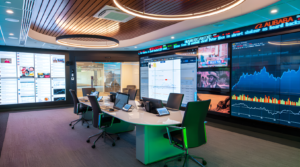
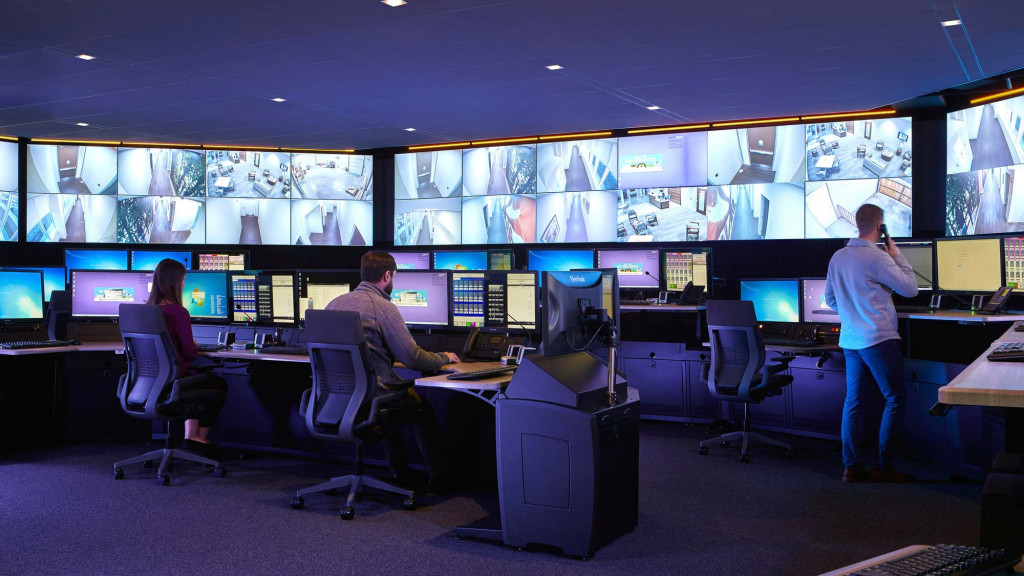
- At the heart of any modern command center is the ability to display and monitor vast amounts of real-time data. LED Video Walls have become a must-have technology for command centers due to their high-resolution displays, energy efficiency, and ability to present multiple data streams simultaneously.
- These LED Video Walls are customizable and can be scaled to fit any command center, from small operations to large-scale corporate environments. With seamless display technology, LED walls offer superior brightness and clarity, ensuring that even the most intricate data is clearly visible from any point in the room.
- For command centers that need real-time visual insights into operational metrics, security footage, or live data feeds, LED Video Walls are indispensable.
- By investing in LED video wall technology, companies can enhance their command center’s visual performance and boost decision-making efficiency, making them a key element for future-proof AV solutions.
2. AI-Powered Analytics and Predictive Monitoring
- One of the most exciting developments in command center technology is the integration of Artificial Intelligence (AI) and Machine Learning (ML). These tools enable command centers to process and analyse large datasets in real time, automating tasks like threat detection, anomaly identification, and system diagnostics.
- AI-powered analytics can predict potential issues before they escalate, providing organizations with the foresight to prevent operational disruptions.
- For example, in a cybersecurity command center, AI-driven systems can monitor network activity, flag suspicious behaviour, and automatically implement defence protocols. Similarly, in energy management or transportation, AI can predict equipment failures or optimize resource allocation.
- By leveraging AI in Command Centers, businesses can automate routine tasks, reduce response times, and make more informed decisions, ensuring that their operations remain efficient and resilient in the face of future challenges.
3. Unified Communication Systems for Seamless Collaboration
- systems integrate video conferencing, real-time messaging, voice calls, and file sharing into a single platform, allowing command center operators and remote teams to stay connected. In today’s globalized business environment, Unified Communication is a cornerstone of effective command center operations.
- The ability to communicate seamlessly across teams, departments, and geographical locations is essential for fast decision-making during critical events.
- Unified communication
- For example, during a crisis, command center staff can instantly initiate virtual meetings, share critical data, and collaborate on real-time solutions without the delays of switching between communication tools.
- AV solutions that integrate these communication platforms help businesses streamline operations, enhance collaboration, and ensure that all teams are aligned, regardless of their physical location. This technology is essential for future-proofing command centers, as it ensures seamless coordination across a company’s global operations.
4. Ergonomic Design and Operator-Friendly AV Solutions
- To create a truly future-proof command center, companies must focus not only on the technology but also on the human element.
- Command center operators often work in high-stress environments and require ergonomic solutions that maximize comfort, reduce fatigue, and improve productivity.
- Ergonomic Command Center designs include features like sit-stand desks, adjustable chairs, and strategic screen placement to reduce strain.
- Additionally, operator-friendly AV Solutions ensure that data is displayed clearly, reducing cognitive overload and allowing operators to quickly focus on the most critical information.
- This operator-centric approach helps improve efficiency and decision-making, ensuring that command center staff can perform at their best even during extended shifts.
- By investing in Ergonomic AV solutions, businesses can future-proof their command centers by promoting a healthier and more productive work environment.
5. Cybersecurity and Data Encryption
- With the increasing reliance on digital technologies, command centers are becoming prime targets for cyber threats.
- To future-proof a command center, businesses must prioritize cybersecurity by implementing robust data encryption, secure access controls, and real-time threat monitoring.
- Modern command centers are integrating Secure AV Solutions that offer advanced encryption protocols and multi-layered security systems.
- These systems ensure that sensitive data, such as customer information or confidential business operations, is protected from unauthorized access.
- Additionally, incorporating backup systems and redundancy measures guarantees continuous operation, even in the event of a cyberattack or system failure.
- By prioritizing cybersecurity in Command Centers, companies can safeguard their operations and ensure that their command centers remain functional, secure, and resilient against potential threats.
6. Scalability and Flexibility for Future Growth
- A future-proof command center must be able to adapt to the changing needs of the organization. As businesses grow, their command center requirements will evolve, requiring more space, more data streams, or advanced analytics capabilities. To meet these demands, scalable AV Solutions are essential.
- Technologies like modular LED Video Walls, flexible control room software, and cloud-based data storage allow command centers to expand their operations without the need for significant infrastructure overhauls.
- Scalable solutions ensure that businesses can easily upgrade their command centers as they grow, while flexible technologies allow for the seamless integration of new tools and systems.
- By investing in scalable AV solutions, companies can build command centers that are future-ready and capable of adapting to their evolving operational needs.
Conclusion: Building the Command Center of Tomorrow
- As technology continues to advance, command centers must evolve to keep pace with the growing demands of modern business operations.
- By integrating key technologies such as LED Video Walls, AI-powered analytics, unified communication systems, ergonomic designs, and scalable AV Solutions, businesses can build future-proof command centers that enhance operational efficiency, security, and collaboration.
- Investing in these cutting-edge technologies will ensure that your command center is ready to meet the challenges of tomorrow, making your organization more agile, responsive, and competitive in today’s fast-moving business environment.